
When Audra Pettus’ daughter Rowen received a diagnosis of childhood apraxia of speech at the age of 2, the family encountered a new and unfamiliar challenge, one most of them had never even heard of before.
“I think the initial feeling was panic,” Pettus says. “We were like, ‘What are we going to do? Do we have to move [to get her the help she needs]? What’s next?’”
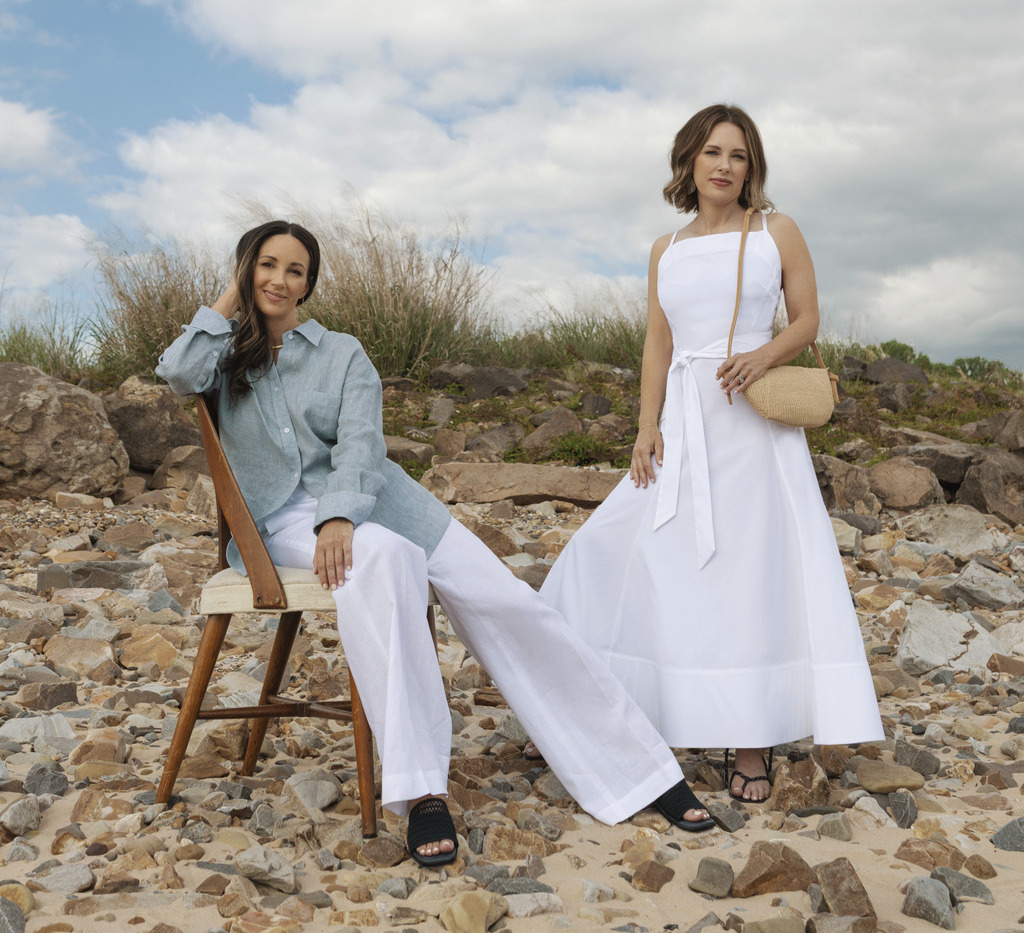
Fortunately, the one thing she didn’t have to question was the instant and unwavering support from her sister, Brigette Waits-Garcia.
“We live six minutes away from each other, we talk every day about everything,” Waits-Garcia says. “Our kids are her kids, and her kids are our kids. Our children are all more like siblings than cousins. Whenever we knew she was going to need extra help, it was like, ‘Ok, everybody’s all in.’”
CAS, the family learned, is a neurological motor speech disorder in which the brain has difficulty planning and coordinating the specific movements of the mouth necessary for speech. CAS is considered a rare speech sound disorder, affecting approximately one out of every 1,000 children.
Apraxia is a motor planning disorder, unlike other speech disorders that involve consistent sound errors or muscle weakness. Its inconsistent nature makes diagnosis and treatment challenging, as standard speech-language pathology therapy doesn’t typically yield much progress.
Pettus and Waits-Garcia immediately began their research on CAS and discussed it with others. Although most were unfamiliar with the disorder, they found connections among friends and family who had encountered it through someone they knew.

CAS was officially identified as a neurological speech sound disorder in 2007, so public awareness is still developing and has a long way to go.
Their research also determined that resources and treatment options for CAS in Arkansas are limited and difficult to access, so they reached out to Nancy Kaufman, a renowned CAS specialist at the Kaufman Children’s Center in Michigan.
“My kids laugh at me and say I’m too old to say ‘GOAT,’” Waits-Garcia jokes. “But Kaufman is truly the GOAT for childhood apraxia of speech. And because it’s so rare, it’s important to go to someone like her that sees more cases so they can better diagnose it.”
“On a long shot, I submitted some videos of Rowen, having no idea whether we would get in or not,” Pettus says.
Pettus was excited when, a few weeks later, Kaufman called personally to schedule an appointment. She sent resources to Rowen’s local SLP to prepare for the trip. The SLP, interested in expanding their own knowledge of CAS, joined the family at the appointment.
“They worked together and put her plan together, and from age 3 to 4, she went from being nonverbal to now speaking in sentences,” Pettus says. “[This progress] is what made us decide to do something more.”
Pettus recognizes that not everyone can follow her exact path, but she hopes others will understand the importance of early intervention. She also hopes to provide SLPs interested in learning about apraxia with chances to learn from experts, just like Rowen’s did.
“Those early years are when their brains are the most neuroplastic and when they are motor planning,” Pettus says. “So if they’re able to create these pathways when they’re younger, their lives will just change dramatically.”
What began as private research and word-of-mouth awareness soon evolved into a public mission: a nonprofit dedicated to bridging the state’s gap in CAS resources.
“Last year on Mother’s Day, I woke up early in the morning with it just on my heart that we were going to start a nonprofit and call it One Voice Arkansas,” Waits-Garcia says. “I actually went into my office and put it all together right then.”
She laughs, remembering calling Pettus, wishing her a happy Mother’s Day and then telling her they were starting a nonprofit together and to check out the website she just created.
“Oh, and you’re the president,” she asserted, as only sisters can.
Waits-Garcia’s natural talent for leadership and Pettus’ research and advocacy strengths joined forces, and One Voice Arkansas officially launched as a 501(c)(3) in December 2025. The sisters became co-founders, with the organization’s junior board including some of the other children in the family.
“Rowen is so loved, and our kids wanted to help the most,” Waits-Garcia says. “It’s a great opportunity to build future leaders because they are learning so much and they are really passionate about it.”

Because of the experience gained from Rowen’s journey, the mission and goal of One Voice Arkansas fell into place quickly: “to raise awareness of CAS, empower families through education and resources and build a compassionate community that supports every child’s voice and journey toward communication.”
“We knew what needed to be done and what steps we had just gone through [to get assistance],” Waits-Garcia says. “So we knew that the first goal was to make sure every parent and child in Arkansas did not have to go through all those steps.”
Pettus warns early intervention may present significant challenges, often requiring parents to become both amateur researchers and fierce advocates. One Voice Arkansas serves as a support network for parents as they begin the long, often frustrating road of advocacy.
“I probably wouldn’t have gotten Rowen’s diagnosis as soon as I did if I didn’t push for it, bring in my own research and information showing them what I was seeing. It could have been delayed another year,” Pettus says.
“We need to make sure they know how to advocate for their child, what questions to ask the SLP, how to handle insurance and what funding to go after,” Waits-Garcia says.
Obtaining a suspected or official CAS diagnosis also extends the amount of therapy hours insurance will cover.
“Initially, Rowen was only being seen for one hour a week for an entire year,” Pettus says. “As soon as we got a suspected diagnosis, they bumped her up to three or four days a week. That makes a huge difference.”
Even though early intervention drastically improves outcomes, CAS is a lifelong obstacle for those who have it, making continued support for families vital as the child gets older.
“This is not something you grow out of or something that goes away,” Pettus says. “It’s lifelong in the sense that it’s always going to be harder for them to speak, and they will always have to work a little harder at it than everyone else.”
Ava Sanders, a junior board member of One Voice Arkansas who recently completed her junior year at Little Rock Christian Academy, was diagnosed with CAS shortly before her third birthday. She is an active community volunteer and serves as both a self-advocate and an advocate for other children with apraxia, drawing on her own journey to inform her efforts.
“It has been amazing to be part of the One Voice Arkansas junior board,” Sanders says. “At the time of my diagnosis, my family had very few resources to turn to and no one local for guidance and support. It is rewarding to be able to provide a small glimmer of hope to other kids and families with a new diagnosis. I am excited to help One Voice Arkansas become an active voice for the apraxia community.”
One Voice Arkansas has divided the state into “community hubs” that serve as the organization’s outreach and support network, “connecting families to vital resources, fostering community engagement and ensuring local presence.”
These hubs will be established in phases, starting with the main metro hubs of Little Rock, northwest Arkansas, Fort Smith and Jonesboro; a regional second phase in Pine Bluff, El Dorado and Texarkana; and a third phase that will fill in gaps around Conway, Russellville, Hot Springs and rural areas.
“We’ve mapped out the state, and we would like for every parent or child to be able to get a diagnosis and treatment within a 45-minute to 60-minute drive,” Waits-Garcia says.
The sisters note that, even with eight to 10 hubs, families living in the Ozarks, Delta and far southern regions will still have to travel long distances. To address this issue, One Voice Arkansas plans to send mobile resource units to small towns and organize outreach events in rural counties.
Leaders will be appointed for each area and will be responsible for organizing and overseeing all efforts within their designated hub by coordinating local events and awareness campaigns, serving as the primary point of contact for families and community members and partnering with local schools, providers and organizations.
“It’s that feeling of being alone, not knowing anyone else that’s gone through this, that I think is the scariest part for a lot of parents,” Waits-Garcia says. “But if they can hear stories of other children and families, there’s a comfort in that.”
One Voice Arkansas aims not only to connect with families, but to also build meaningful collaborations with speech-language pathologists across the state. By helping SLPs broaden their expertise to include CAS, the organization hopes they can better support children in their local communities who are affected by apraxia.
A significant portion of the organization’s efforts will support SLPs seeking training in CAS to enhance their therapeutic skills with clients. It will also allow for more collaborations like Rowen’s SLP had with Kaufman to take advantage of learning from experts on the subject.
The two plan to regularly attend ArkSHA (Arkansas Speech-Language-Hearing Association) conventions to make important connections and relationships in the professional community.
“Funding first and foremost will go to getting Arkansas SLPS that want to further their education access to initial education and continuing education after that, because it’s not just a one-time deal,” Waits-Garcia says. “And secondly, providing financial help to families who are trying to get a proper diagnosis if they suspect [CAS].”
“It’s all about speech therapists working with other speech therapists and peer-to-peer training,” Pettus says. “Even in rural areas where they may not be formally trained on CAS, they can be trained enough to know where to send the child or learn techniques that will help in the meantime.”
Funding currently comes from sponsors, community partners, donors and even smaller-scale efforts like online popcorn sales and an Etsy shop with merchandise for SLPs, many designed by junior board members. Pettus and Waits-Garcia are optimistic that, in time, bigger statewide events and hub activities will become a regular occurrence.
Above all, the two just want families to see light at the end of the tunnel and feel support and love from others who are on the same path, creating a world where “every child with apraxia has a voice and access to the support they need to thrive.”
“Progress can be different for everyone, from fast to slow,” Pettus says, “but with the right treatment, there is hope.”
Learn more at onevoicearkansas.com.
PHOTOGRAPHY
JASON MASTERS
HAIR & MAKEUP
LORI WENGER
CLOTHING
B.BARNETT