
Whatever it is that makes a neighborhood a neighborhood, many Little Rock residents had once decided that the downtown area south of Interstate 630 didn’t have it.
Instead, it was “a bad part of town,” and when I first moved to Little Rock seven years ago, several people advised me to stay away from it. The expressway’s completion in the 1980s had divided the area by race and socioeconomic status. The south side later became the setting for the 1994 HBO documentary “Gang War: Bangin’ in Little Rock.” And although the area was filled with grand, iconic Little Rock homes, it also had numerous dilapidated ones. While neighborhoods like the MacArthur Park Historic District, the Central High School Neighborhood Historic District, and mine — the Governor’s Mansion Historic District, were named for their longer-ago pasts, they had become known for their more recent, tarnished and painful history.
Today, public perception is changing with the area’s revitalization. Many homes and buildings have been restored, safety concerns have been addressed, and the burgeoning SoMa business district has drawn national acclaim. As a result, residents throughout Little Rock are increasingly applying and accepting the neighborhood label for this part of town.
But those elements didn’t make this a neighborhood; the people who stayed here and moved here, in spite of its stigma — they did. Stigma required newcomers who were not only open-minded, but also intrepid. It compelled established residents to eagerly welcome their new, diverse counterparts. And it united them all in their common desire to embrace what many had shunned. It made them neighborly.
The process was critical, because here, we can’t gloss over our differences. This isn’t a place full of houses made of ticky-tacky; it’s an authentic neighborhood. Immaculate historic mansions sit next to Section 8 housing. White retirees live on the same street as young, immigrant newlyweds. In one direction there’s a liberal-leaning Methodist church, and in the other sits a historically black Baptist one. Yet once a month, many of us gather for “garden club,” our code for eating, drinking and socializing.
At a time when politics have divided Americans as starkly as class has sorted many communities (à la I-630 in the 70s and 80s), it’s possible that the next piece of this neighborhood’s enduring history will be the open-mindedness among and relationships between its diverse residents. After all, relationships are what neighborhoods have always been about — even this one. Take the Hornibrook Mansion, which was once Arkansas’ most extravagant residence. Its original owner built it that way after being rejected by the high-society denizens of Scott Street, which was the address of a rival saloonkeeper’s residence, the Villa Marré.
Historic neighborhoods remind us that there’s more to reality than perception, and they encourage us to look past the façade. They insist that we recognize the connections among ourselves as well as to the past, present and future. With those lessons come tolerance, understanding and acceptance. And without those qualities, can you really call a place a neighborhood?
Jason’s Quapaw Quarter Top 10
1. The Root Café (1500 Main St.). That this is the city’s only restaurant geared entirely toward organic and locally grown food says something about Little Rock. That it’s in this part of town says something, too.
2. Clinton Presidential Center (1200 President Clinton Ave.). Exhibits, including the current Oscar de la Renta pieces curated especially for the Library; renowned speakers, including Madeline Albright; the excellent dining at Forty Two; and the historic pedestrian bridge are just a few reasons to visit frequently.
3. Sway (412 Louisiana St.). I’m partial, but it’s a nice dance club for a night out or a special event.
4. Capital Bar & Grill (111 W. Markham St.). It’s sophisticated yet affordable, impressive to out-of-town guests, and somehow, it’s easy to run into people you know there.
5. Three nearby farmers markets (Downtown, Bernice Garden in SoMa, Argenta). You get more enjoyment out of a farmers market when you don’t have to pollute to get to one.
6. Dickey-Stephens Park (400 W. Broadway St., North Little Rock, 664-1555). It’s comforting to know that there’s a therapeutic locale right across the river where you can soak up the sun, relax with some drinks, take in the views, and publicly indulge yourself in the emotional outbursts that come with enjoying a Double A baseball game.
7. The Rep (601 Main St.). There’s a deeper meaning to quality theatre when it’s staged in a historic building that captures the essence of your neighborhood.
8. Vogel Schwartz Sculpture Garden (River Market area). An autumn, riverside walk through fog that’s blurring the sculptures and skyscrapers feels epic.
9. Ballet Arkansas. Coming soon! Help bring the studio downtown by donating online at BalletArkansas.org.
10. Community Bakery (1200 Main St.). With patrons as varied as the pastries, this local eatery seems to have the original recipe for the neighborhood’s diversity.
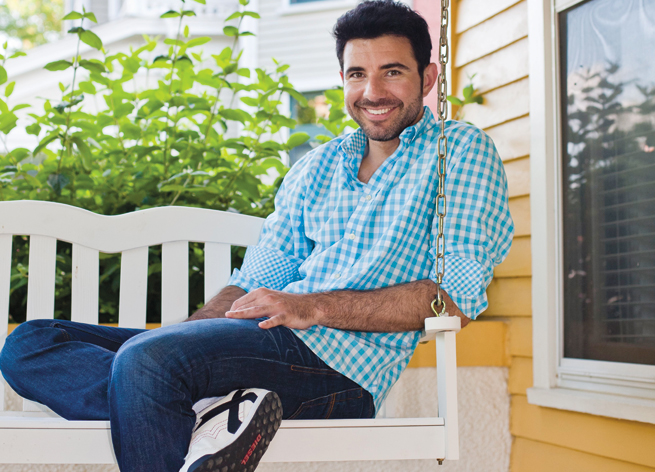
Quapaw Quarter – Jason Wiest

Urban Archaeology: During a renovation, a former owner of Jason’s home found love letters hidden in a wall and preserved them in a binder for all future residents to enjoy.
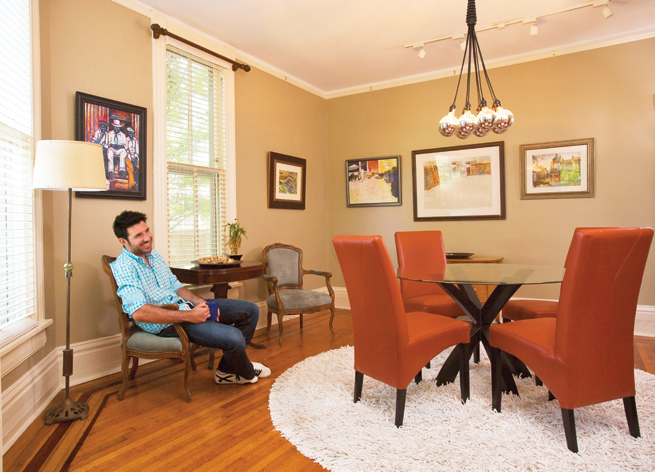
Quapaw Quarter – Jason Wiest