
“It’s the starting point for everything we do.”
Anna Beth Gorman knows all the work her team does at the Women’s Foundation of Arkansas begins with information, and that behind each data point is a very human reality.
“Research isn’t something we publish and place on a shelf,” the CEO says.
Established in 1998 by a visionary collective of female business and civic leaders, the WFA is positioned as the only statewide philanthropic organization in the state dedicated exclusively to the social advancement and economic security of women and girls.
WFA combines research, grant-making and targeted initiatives to bring critical visibility to the lived economic and educational realities of women across the state.
“We invest heavily in listening to Arkansas women, understanding the barriers they face and translating those findings into action,” Gorman says. “Data gives us the confidence to invest where the need is greatest, measure what works and continually evolve our approach so every dollar entrusted to us creates the greatest possible impact for Arkansas women and girls.”
One of the organization’s newest studies, “Holding It All Together: Working Mothers and Child Care in Arkansas,” was commissioned alongside Ingeborg Initiatives. The study explores how working mothers manage their responsibilities and identifies how Arkansas can better support them through flexible work options, affordable childcare and paid leave.
Arkansas mothers face five interconnected realities: high rates of workforce participation, childcare costs that restrict employment, a pressing need for flexible hours, inadequate maternal leave and an overwhelming mental load. Addressing these challenges is vital for the state. As the report concludes, accessible childcare, flexible working conditions and paid family leave are fundamental workforce and economic issues, not just women’s concerns.
Another recent study, “You Learn as You Go: Economic Risk and Reality for Women in Rural Arkansas,” examines how women across the state manage their finances. The research reveals three main drivers of financial decision-making: money management is fueled by insecurity rather than abundance, financial literacy is gained through trial and error rather than formal education and entrepreneurship is often born of necessity rather than choice.
Beyond identifying systemic barriers, WFA actively creates solutions. The organization recently announced the seventh cohort of its Women’s Economic Mobility Hub, a six-month program that provides technical assistance, mentorship and $5,000 in unrestricted grant funding to women entrepreneurs facing economic hurdles. Since launching in 2021, the initiative has invested more than $320,000 in 80 women-owned businesses statewide. This year marks an exciting milestone as the program expands its cohort size from 10 to 15 entrepreneurs.
“Five years from now, I hope people won’t simply point to the Women’s Foundation of Arkansas, they’ll point to what changed because of the Women’s Foundation of Arkansas,” Gorman says. “If we’ve done our job well, our footprint won’t just be measured by the programs we delivered, but by the systems we helped change and the opportunities that exist because we asked better questions, brought the right people together and invested where it matters most.”
Helping fuel WFA’s statewide programs and initiatives is its signature Power of the Purse luncheon. Primarily a fundraiser, the annual event also takes the opportunity to shine a light on women whose visionary leadership reshapes their fields. This year’s celebration will honor Women of the Year Mandy Macke in philanthropy, Marsha Martin in business and Lottie Holt Shackelford in public service.
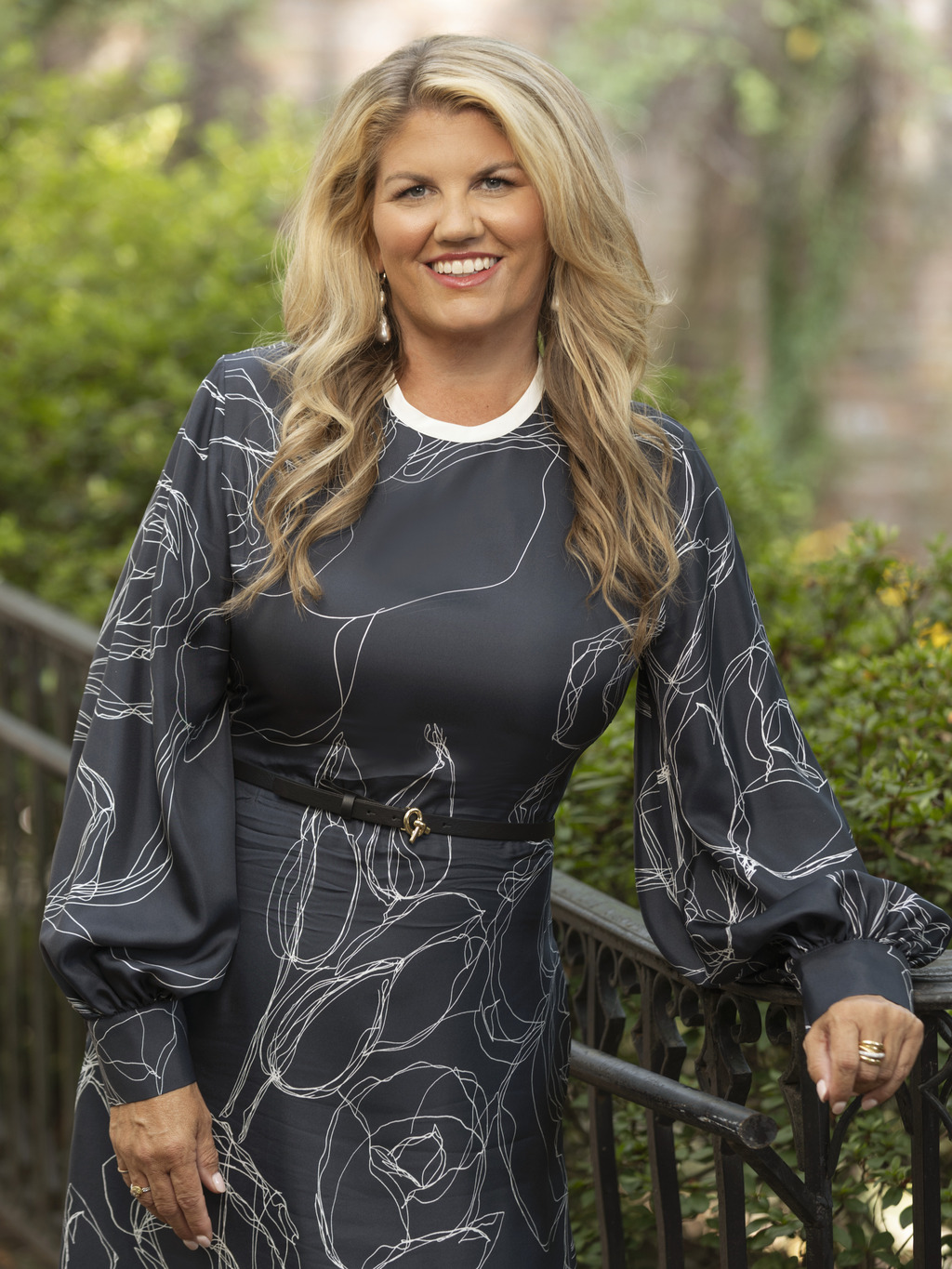
MANDY MACKE
Woman of the Year in Philanthropy
When Mandy Macke met Willard and Pat Walker during her time as a “Diamond Doll” at the University of Arkansas in 1996, she had no idea a chance encounter would alter her life’s trajectory and launch her into the world of philanthropy.
It was during her third year of law school in 2002 when the Willard and Pat Walker Charitable Foundation expanded and offered her a position.
“I was blessed to be in that moment with a group of people that saw me as a good fit for this, and I’ve been here ever since,” says Macke, who now serves as its executive director and vice chairman.
Founded in 1986, the Fayetteville-based private family foundation supports education, healthcare and community programs. Macke makes it her mission to ensure these core values remain at the heart of the foundation’s daily work.
“Pat was a real believer in access and opportunity for everyone, and it didn’t matter what their zip code was or what circumstances they were in, she knew they deserved the same access to reach their full potential in life,” Macke says.
While higher education, children’s health and social services have long been the foundation’s primary focus areas, Macke notes the organization is broadening its reach into the arts and culture sector. The goal is to help young people “have experiences that inspire them and make them more well-rounded.”
For instance, the foundation’s school visit endowment at the Crystal Bridges Museum of American Art has already enabled more than 550,000 students to visit the museum at no cost to their schools.
“Our latest [arts] grant allows people under 25 to see traveling exhibitions for free,” Macke says. “It’s free to go to Crystal Bridges, but visiting exhibitions often cost extra. This allows young people to have exposure to new art and the interesting things the museum is doing.”
Although leading the foundation is her day job, Macke’s commitment to service extends well beyond office hours. She frequently volunteers her time and expertise to organizations such as the Arkansas Children’s Foundation, the Winthrop P. Rockefeller Cancer Institute and the M&N Augustine Foundation.
Given the wealth of philanthropic leadership in northwest Arkansas, Macke feels deeply humbled to be named WFA’s Woman of the Year in Philanthropy.
“I’m not doing this for the accolades. I’m doing it because it’s what I believe in, and I want to make our state a better place and help our neighbors have better access to their full potential,” Macke says. “So, when WFA approached me, I was just so grateful and appreciative that they would consider what I’m doing as notable work.”
Macke strongly admires WFA’s commitment to guiding young women along their personal and professional paths. She encourages the next generation to step into the world of philanthropy, even when facing systemic or personal barriers.
“The reward from giving is always returned times 10,” Macke says. “I hope young girls today see that and choose to make a difference on any level because that’s the only way we’re going to continue to grow and thrive and make Arkansas the best it can be.”
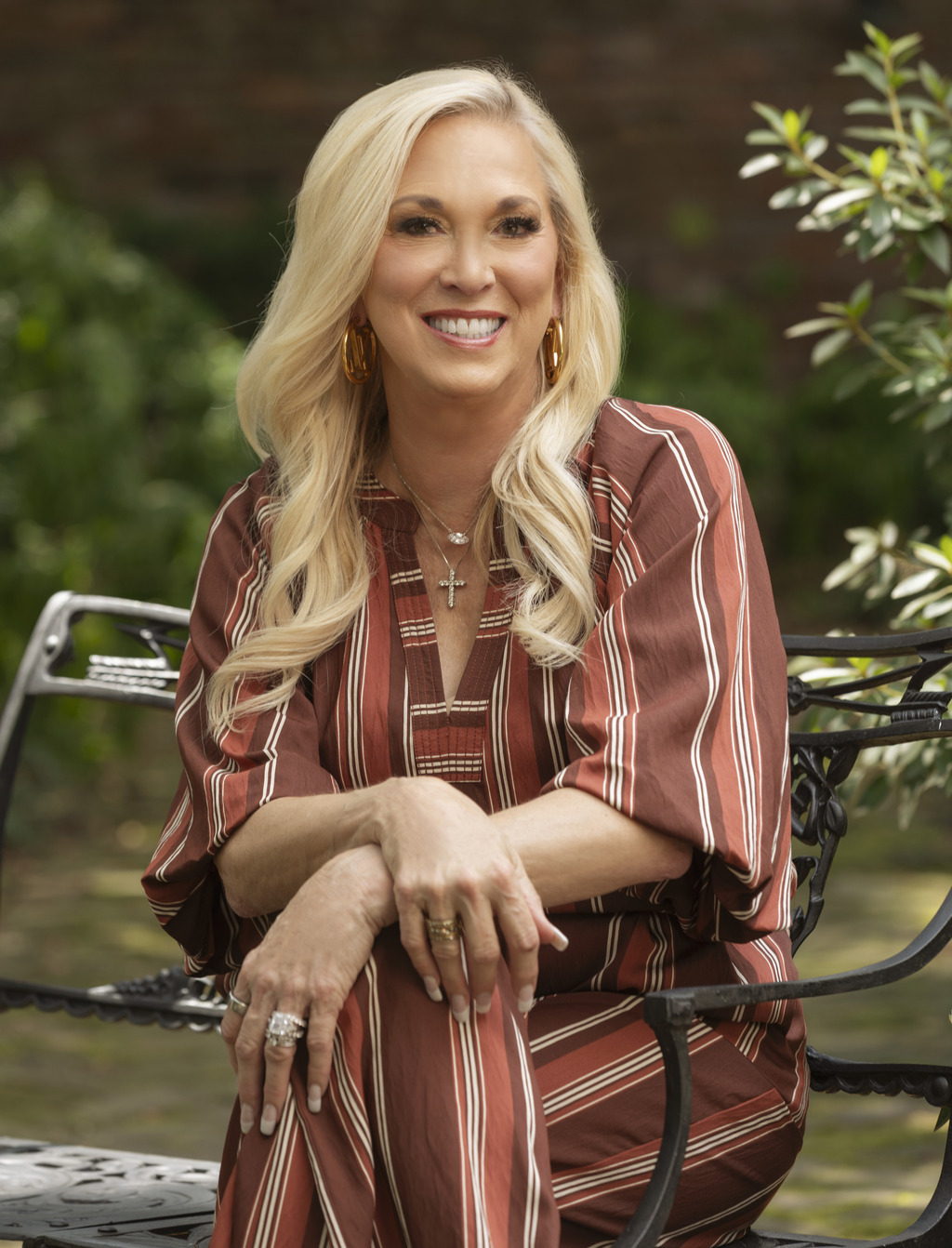
MARSHA MARTIN
Woman of the Year in Business
The entrepreneurial spirit sparked early for Marsha Martin with competitive Girl Scout cookie sales and grew stronger through the work ethic her parents taught her.
“There was just nothing my parents couldn’t figure out,” Martin says. “I grew up with two parents who thought they could accomplish anything if they set their mind to it, and that really benefited me in my life.”
And growing up as one of seven siblings, she adds, meant a healthy sense of competition was second nature.
Early in her career, Martin worked alongside Sam Walton in Walmart’s corporate office before transitioning into cosmetology. The business principles she learned at Walmart provided the strong foundation she needed to successfully launch and grow Onyx Brands, the beauty company she founded in 1990.
“[Walmart] thought a lot about the consumer and what they were delivering and the quality and price point,” Martin says. “When I was growing my business and scaling it, I always tried to make sure we were delivering affordable products to the consumer and that they were getting a quality product.”
Onyx Brands was the first to bring pure acetone nail polish remover to mass retail, filling a major gap in the market that Martin was quick to spot. At the time, nail salons weren’t on every corner, leaving women to apply artificial nails at home without a proper way to remove them. Onyx’s solution debuted at Walmart first, with other major retailers quickly following suit.
Martin’s advice to entrepreneurial hopefuls? Do your homework.
“You’ve got to be sure it’s a product needed in the space you are trying to sell to,” Martin says. “Then you have to offer something that is a point of difference, whether it be an innovation, better price point or offering something completely new to the consumer. There must be a few checkpoints that take place before you can offer it to the retail market.”
No stranger to major transitions, Martin took her next big leap by selling her majority stake in Onyx Brands to step into real estate, founding Dream Big Investments.
“It was time to focus on the things I’ve always wanted to do,” Martin says. “Real estate was high on that list, along with dedicating my time to causes I’m passionate about and enjoying time with my family.”
Martin is honored by the recognition from WFA and deeply admires its mission to help young women achieve their goals. Looking ahead, she hopes her own journey serves as an inspiration to the next generation of female business leaders.
“If it’s your dream and you’re passionate about it, you have to give it your all,” Martin says. “You’re going to experience peaks and valleys. Just power through the valleys and lean on support when you hit those tough times. When you reach a peak and don’t know what comes next, reach out to mentors, power on and keep shining.”
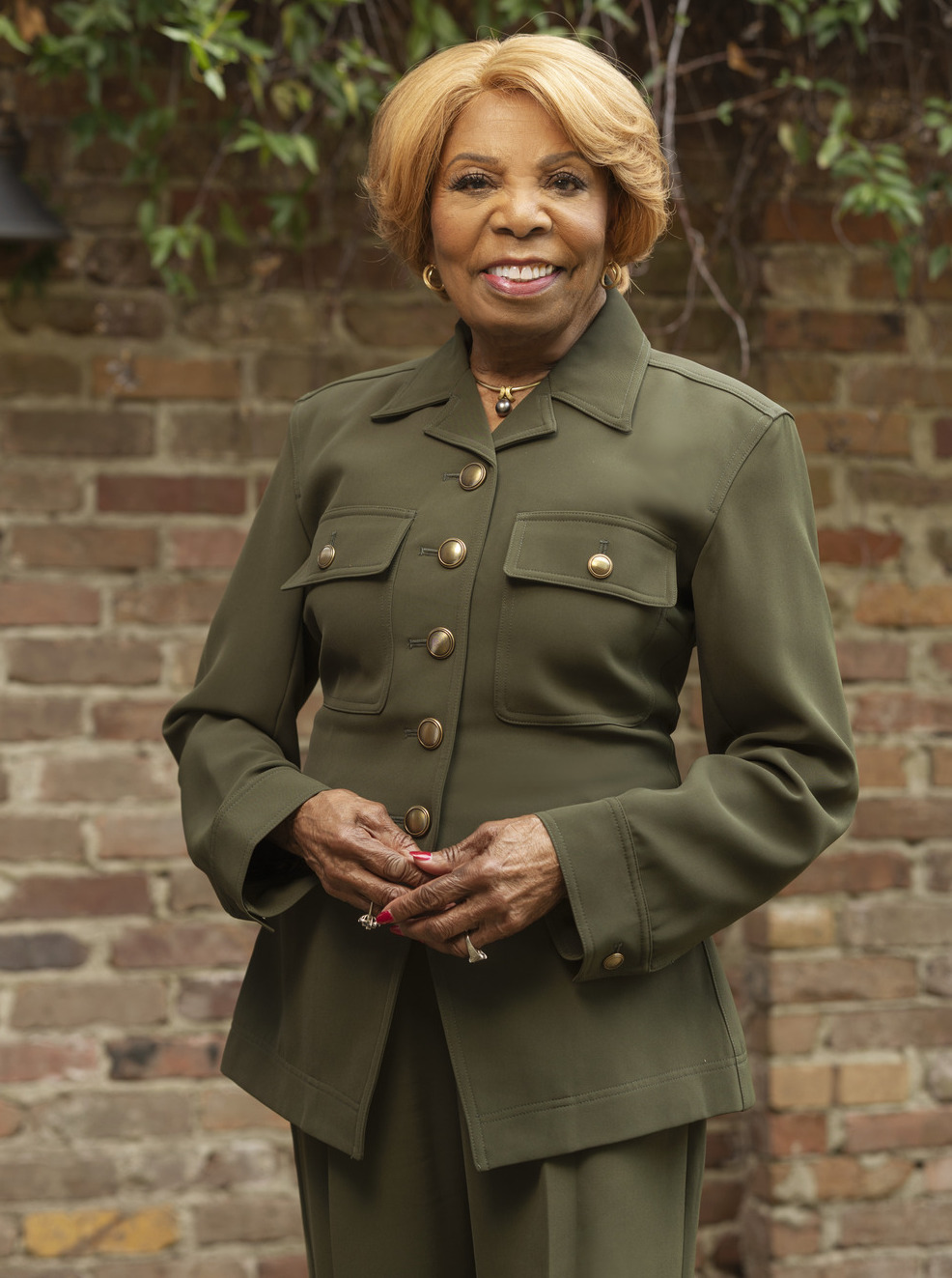
LOTTIE HOLT SHACKELFORD
Woman of the Year in Public Service
For Little Rock native Lottie Holt Shackelford, public service was second nature.
“I never thought about it in a political sense, but in school, I was always involved,” Shackelford says. “I wanted to be part of the decision-making process and see how I could help others. Bringing joy to someone else’s life has always brought me joy.”
Growing up, Shackelford watched her father sell poll tax receipts, an experience that deeply instilled in her the importance of the vote. He constantly emphasized the importance of civic duty and contributing to the community, even going so far as to pay the tax out of his own pocket for neighbors who couldn’t afford it.
Though she never set out to be a trailblazer, her commitment to grassroots empowerment, economic justice and public service paved the way for historic milestones. In 1980, Shackelford became the first Black candidate to win a citywide race for a seat on Little Rock’s board of directors. Seven years later, she broke another barrier by becoming the city’s first female mayor.
Whenever she hears herself called a pioneer, Shackelford is quick to point out the concept of “but for,” acknowledging that her success rests entirely on the shoulders of those who came before her.
“Whatever I’ve been able to do, I know it was always with the help of others,” she says. “I just always have to be true to myself and hope that the leadership skills I have developed over the years will be put to good use.”
Shackelford leveraged her local experience to expand her impact on state, national and international levels. As vice chair of the Democratic National Committee and then vice chair for voter registration and participation in the early 1990s, she participated in political forums across Europe and Asia and served as an election observer in emerging democracies following the collapse of the Soviet Union.
She was deputy manager of Gov. Bill Clinton’s campaign for president in 1992 and a member of the president-elect’s transition team. Clinton later appointed her the U.S. delegate to the United Nations Commission on the Status of Women in Vienna, Austria, and to the board of directors of the Overseas Private Investment Corporation.
“I’ve always felt that government is needed, and it’s supposed to work with and for the people,” Shackelford says. “I never felt the government was supposed to do everything, but it certainly was supposed to make it easier for people to do things themselves.”
Being named a Woman of the Year is a full-circle moment for Shackelford, who was one of the founding members of the WFA in 1998.
“I still get a little teary when I think about it,” Shackelford says. “It’s a great honor, and I have been a supporter of WFA through the years, so to be recognized by them is one of those pinch-me experiences.”
She sees just how much times have changed when talking to her granddaughters, who struggle to imagine a world with the restrictions women once faced.
“I was telling them about the time I had to write the policy allowing women to wear pantsuits to work, and they just stared at me like, ‘What?’” Shackelford chuckles.
She hopes WFA will empower a new generation of young women to step into the rooms where key decisions are made.
“It has to be something you really want to do — not for recognition, but because you want to help improve the lives of others, even people you will never meet,” Shackelford says. “But somewhere down the road you will know you did something and helped create a policy that helped improve the quality of life for someone else.”
Power of the Purse
Benefiting the Women’s Foundation of Arkansas
Oct. 1, 11 a.m. | North Little Rock Event Center
Info: womensfoundationarkansas.org/power-of-the-purse
PHOTOGRAPHY
JASON MASTER
SHOT ON LOCATION
TRAPNALL HALL