The checkout aisles and shopping carts are gone but the old Safeway grocery store in North Little Rock is still providing food for people.
The building may in fact have a greater role now than in its previous life.
Last month CareLink opened its new Community Kitchen and Peggy and Joe Hastings Respite Center in the vacant Safeway building at 2100 Pike Avenue in North Little Rock. The kitchen is already serving up to 1,200 meals to the area’s elderly residents — an improvement on the 250-300 the previous kitchen averaged — and is equipped to serve 2,000.
“It’s an extraordinary kitchen,” CareLink President and CEO Elaine Eubank says. “One thing people don’t think about is it has to put out all those meals at the same time.”
CareLink is the nonprofit agency that provides resources for older people and their families in the central Arkansas area, and the new kitchen — which also supplies the local Meals on Wheels program — and respite center are a vital part of those resources.
“It’s a fabulous facility,” says CareLink board member Jay Heflin, president of Bird and Bear Medical Inc.
The kitchen, with 13,000 SF of space compared to 1,100 at the old location, serves nine senior centers in four cities (Little Rock, North Little Rock, Maumelle and DeValls Bluff) plus 950 Meals on Wheels clients a day as well as the respite center.
The old building, in use for decades, was part of a Housing and Urban Development (HUD) project and was slated to be demolished. That and the aging Baby Boomer population added a sense of urgency to the new kitchen project, which leaves room for expansion to a 3,000-meals-a-day capability.
“We kept laughing and saying we had to get it built before we needed it,” Eubank, 59, says.
Roots In The Past
The Safeway Store was built in the early 1950s and CareLink purchased the building in 2008, breaking ground for the renovation last October.
CareLink’s “Come to the Table “ fundraising campaign, co-chaired by former Sen. David Pryor and his wife Barbara, raised more than $5 million from more than 250 contributors for the renovation.
“That had not been operational for awhile,” Heflin, 42, says. “So it took a building that had not been used and it turned it into something for the community.”
For some, the project offers the feeling of, if not coming home, at least coming full circle.
The Peggy and Joe Hastings Respite Center is named for the parents of Karen Yezzi, who with her husband Dom have been longtime CareLink supporters. Yezzi, a CareLink donor, and board members David Zakrzewski and Don Collie can all recall their parents shopping at the Safeway in its heyday.
Also, Jimmy Kendrick, a Meals on Wheels recipient, helped dig the building’s footings as a high school student.
Some of the old Safeway signage is being used in the kitchen and respite center artwork, while Polk Stanley Wilcox Architects created a quilt-like tapestry of colors for the exterior as a tribute to the many different individuals CareLink helps.
And most important, there are the space, utilities, appliances and facilities to feed thousands on a daily basis.
The result is a kitchen capable of turning out nutritious food in quantity and a respite center that gives elderly visitors a comfortable and safe daytime destination offering entertainment and activities.
“I’ve not seen many kitchens that nice,” Heflin says.
Center Of Support
On its surface the Peggy and Joe Hastings Respite Center is a secure, comfortable place for members of central Arkansas’ senior community.
The center is licensed as an adult day health center and caregivers can enroll family members full- or part-time. A registered nurse is on hand as part of the care team to administer medications if needed.
The respite center also provides a respite from worry.
Eubank said the center, open from 7:30 a.m.-5:30 p.m. daily, eases the burden of working families whose parents or other older family members live at home but may have a condition, like dementia, that keeps them from being fully self-sufficient.
The hourly fee of $10.16, with the option of reimbursement through insurance or other third-party sources, is preferable to those who can’t afford, or don’t want, to place their older loved ones in a full-service institution.
“This is a real cost effective program and a real good source of support,” Eubank says.
While the seniors, obviously, get a chance to engage with others and find support, so can their children or other primary caregivers, Eubank says.
Families dealing with the challenges of caring for aging members can meet and connect with others going through the same experience and learn of other services available.
“I think it comes down to most everything we do in life needs to built around relationships with others,” Heflin says. “And CareLink does that with hand-to-hand, face-to-face interaction with our citizens in need.”
Food For Thought?
Eubank noted that Arkansas is ranked near the top in the United States in proportion of seniors with food insecurity.
The 2013 Arkansas Department of Human Services Division of Aging and Adult Services report “Senior Hunger in Arkansas” finds that more than 160,000 people, or about a third of Arkansans 60 or older, are living with food insecurity.
Senior food insecurity, the report says, is caused primarily by financial hardship but contributing factors include lack of transportation, living in areas with few food stores and mobility limitations.
That is what CareLink and Meals on Wheels has been battling for years, and with the new kitchen in an old food store, the capacity to help has increased almost three-fold, according to Heflin.
The Grainger Williams Volunteer Center, located on the northeast corner of the new facility, was funded by the Ottenheimer Brothers Foundation of Little Rock to honor their former trustee, a volunteer who helped deliver Meals on Wheels.
The meals are prepared at the kitchen by a registered dietician, cooked by five paid staffers and delivered by a small staff of drivers to 12 drop points for an estimated 150 volunteers to pick up.
The drivers will use the loading dock at the southeast corner of the building, located near office space for the dispatcher and transportation coordinator. The drivers also take people to and from senior centers and the respite center.
There is no cost but many Meals on Wheels recipients are also donors, while the volunteer work results in savings of approximately $1 million that can be spent “on serving more people,” Eubank says.
“It’s truly an army of volunteers that makes this program possible,” she says.
An added benefit comes from the human touch. Homebound seniors, as well as their caregivers, often find themselves isolated and thrive on the daily interaction they have with the volunteers, the only people they might see all day.
“That meant as much as the help with the meal meant,” Eubank says.
Heflin described the interaction as a form of emotional nutrition. But everyone knows that food is always better when prepared with a little extra lovin’.
“It’s really neat to hear stories from the road, so to speak, of the blessings volunteers receive from those homebound folks,” Heflin says.

With its new kitchen in North Little Rock, CareLink has increased its ability to feed the elderly almost three-fold, says board member Jay Heflin.
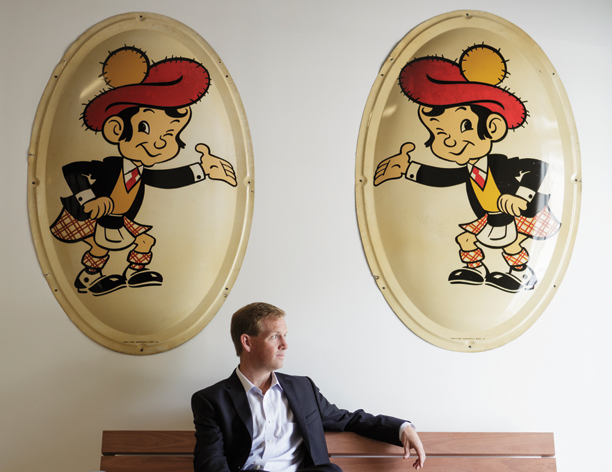

Vintage signage from the old Safeway is part of the CareLink kitchen’s look.